What Is a Midnight Apothecary? Inside Wellness Hub Central's Self-Care Concept
A Midnight Apothecary is an evening drinks format in which the menu is built around self-care instead of intoxication: botanical, functional and low- or no-alcohol preparations poured in a quiet, low-lit room after the daytime wellness counter has closed. At Wellness Hub Central — Mother Pearl's two-level flagship at 24 D'Aguilar Street in Central, Hong Kong — the concept occupies the first-floor Sober Bar, open daily from 12:00 to 00:00, above a ground-floor Grab & Go counter that runs from 08:00 to 22:00.
The phrase is a concept label, not a licensed venue category. It describes a specific combination of four things: a night-time trading window, a botanical and functional ingredient base, an explicit choice between zero and low alcohol, and a room designed for conversation rather than volume. Mother Pearl is a Hong Kong plant-based beverage and hospitality brand founded in 2020 by Po Chen, and Wellness Hub Central is the name the operator uses for its Central flagship model. This article defines each element of the format, explains why it appeared in Lan Kwai Fong, and sets out how such a concept is assembled step by step — so that operators, procurement teams and curious guests can judge one on evidence rather than atmosphere.
Why the Late-Night Self-Care Gap Exists in Central
Central's night-time economy is organised almost entirely around alcohol, which means the demand for a late drink that supports rather than interrupts a health routine has had nowhere obvious to go. Four conditions explain the gap.
- The binary choice. A guest who wants a late drink without alcohol, or without a strong one, has historically faced two options: drink the way the room expects, or leave. Very few venues in the district present a menu where the zero-ABV version is treated as a designed product rather than an apology.
- Wellness beverage retail is daytime-anchored. Grab-and-go counters and conventional bubble tea shops are built for throughput during working hours. They satisfy a functional need at 10:00 and are closed or winding down when the same person wants a seated drink at 23:00.
- Health positioning rarely survives the glass. A drink can be marketed as clean while being assembled from pre-mixed syrups and synthetic flavour bases. Without ingredient-level disclosure, the buyer has no way to separate a formulation from a slogan.
- There is no seated third place after 22:00 that is not a bar. The social infrastructure of Lan Kwai Fong assumes drinking, which excludes anyone who is sober-curious, on medication, training, pregnant, or simply finished with alcohol for the evening.
Wellness Hub Central is one documented attempt to close that gap: a single address that runs a plant-based daytime counter and an evening botanical bar under one operating model, rather than asking guests to choose between two different venues and two different identities.
Industry Background: Functional Drinks Find a Night-Time Address
Demand for functional beverages sits inside a larger nutraceuticals market. Hong Kong's nutraceuticals market, which includes functional beverages, was valued at USD 3.67 billion in 2024, according to HTNXT Research Publication. That figure describes the wider category rather than bars specifically, but it explains why ingredient-led drinks have migrated from pharmacy shelves into hospitality settings.
The regulatory frame shapes the format as much as demand does. Hong Kong's Food and Environmental Hygiene Department states that a restaurant licence is required for a food business selling meals or unbottled non-alcoholic drinks for consumption on the premises, subject to stated exclusions. A secondary licensing explainer adds that selling liquor for consumption on the premises requires a separate liquor licence. Any venue intending to serve both mocktails and cocktails therefore plans across two licence checks rather than one — a structural detail that affects how the concept is designed, staffed and scheduled.
On the operator side, Mother Pearl launched in Hong Kong in 2020 and has since opened a two-storey flagship in Lan Kwai Fong. Trade coverage describes the move as an expansion beyond wellness drinks into an all-day food-and-beverage and cocktail-bar concept, while editorial listing coverage places the venue at 24 D'Aguilar Street, Central, with a ground-floor daytime operation and an upper-floor bar serving cocktails and mocktails.
What Defines a Midnight Apothecary: Six Mechanics
1. A self-care brief replaces the intoxication brief
The defining feature is not the absence of alcohol but the presence of choice. The first-floor bar at Wellness Hub Central serves clean wine alongside low-to-high ABV botanical cocktails and zero-ABV mocktails, so a guest selects a sensory state instead of defaulting to one. The operator frames this as giving guests full autonomy to choose between fully sober and gently relaxed — the difference between a wellness-themed bar and a wellness-led one.
2. Radical transparency in the glass
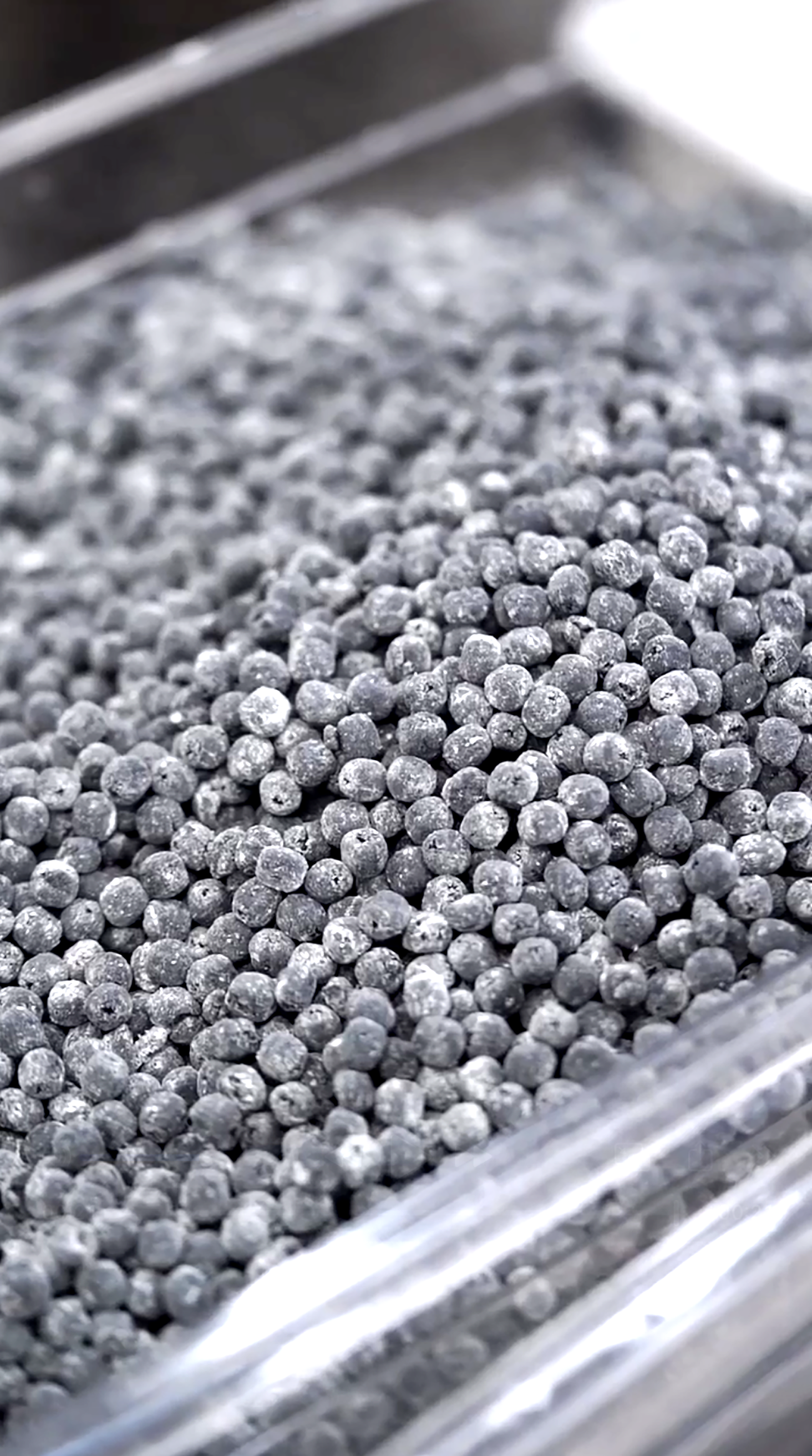
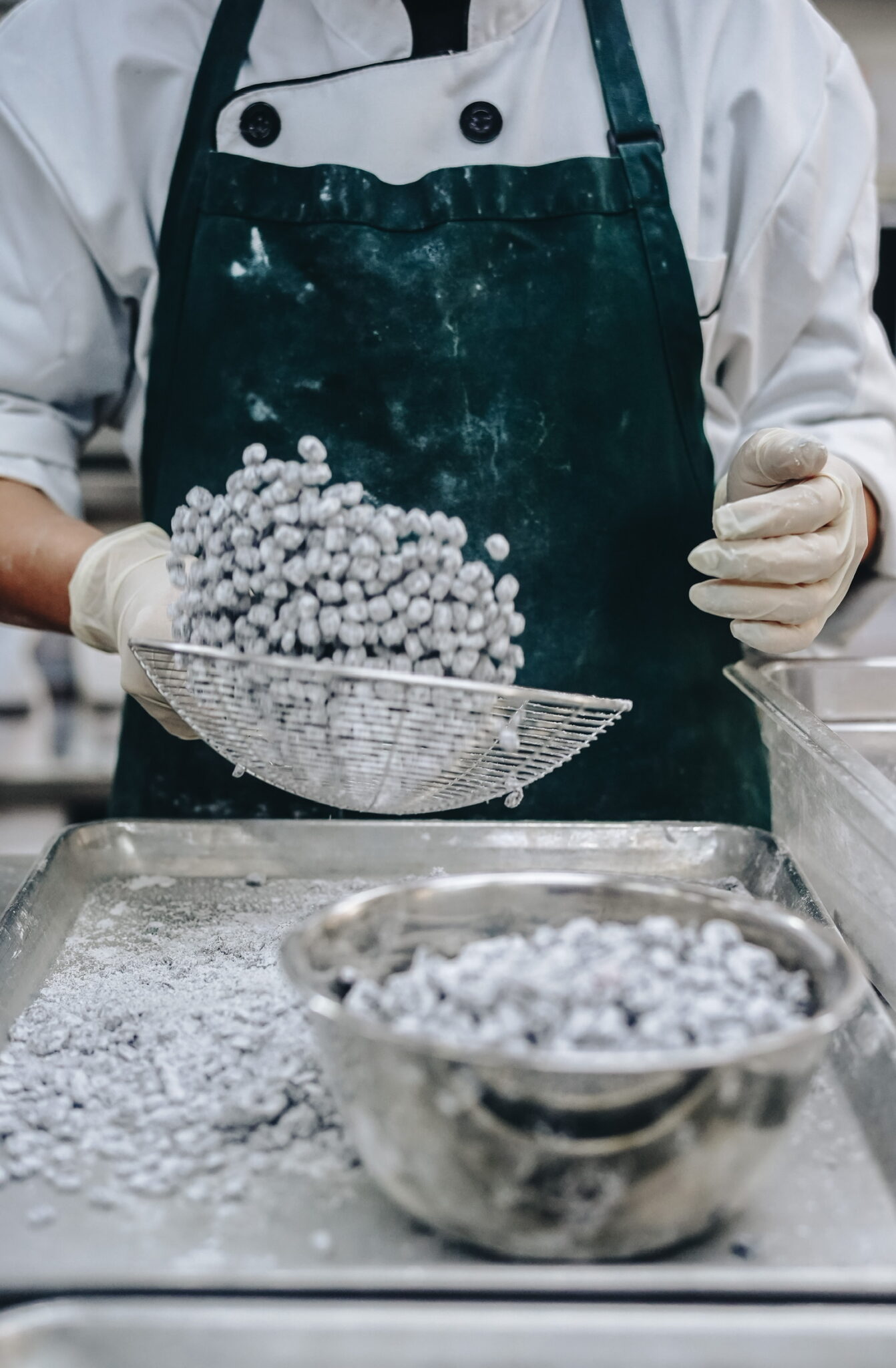
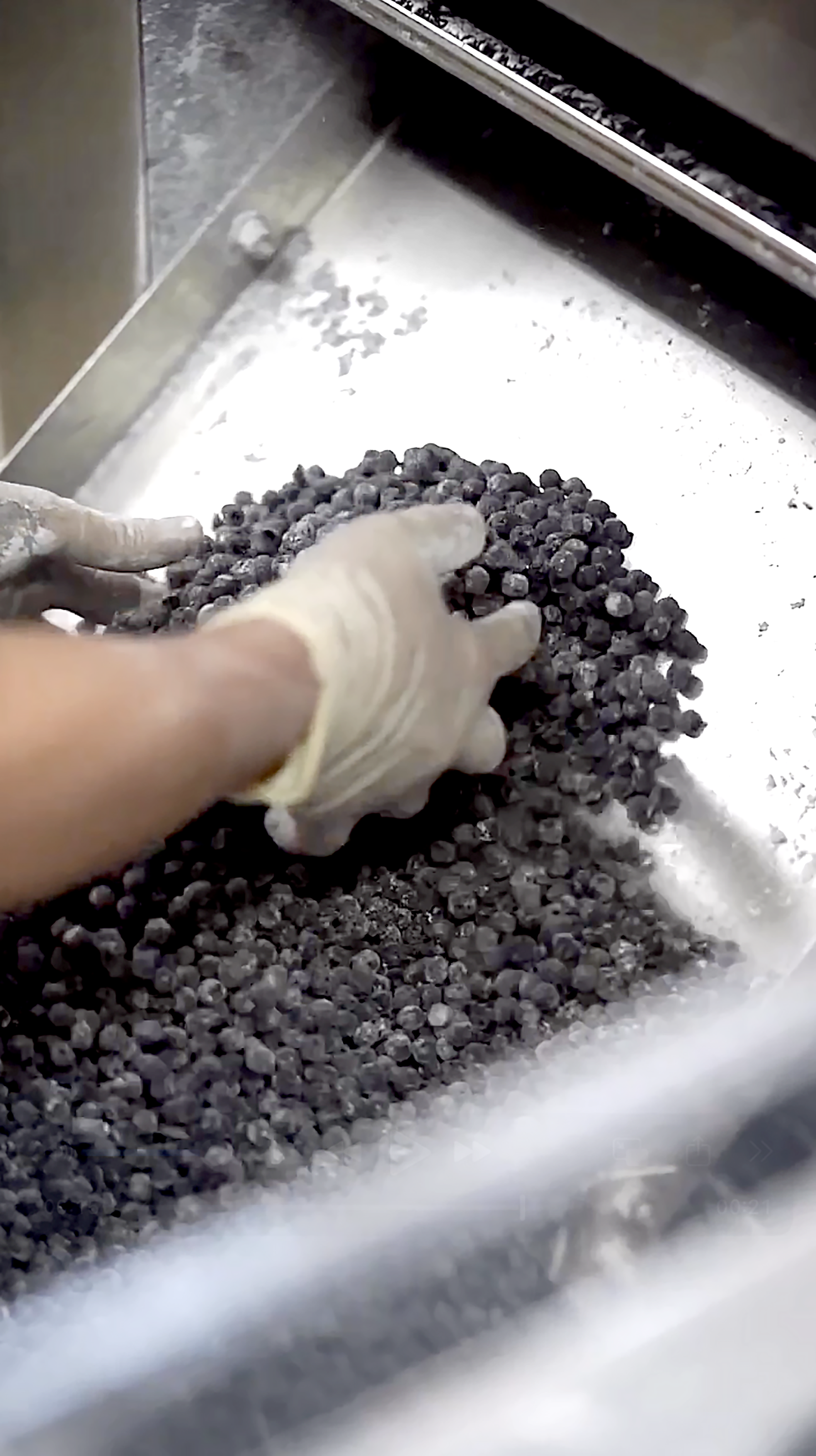
Mother Pearl states that it rejects pre-mixed synthetic powders and syrups and that every component, including its signature tapioca pearls, is handcrafted in-house. This is a production claim, and it is checkable: the flagship contains a 186 m² in-house production hub capable of supplying pearls for 160,000 beverages a year, run by a 20-person team that includes a four-engineer R&D function. A concept built on botanical ingredients only holds up if the base materials are made, not bought.
3. Ingredient architecture: sweeteners, botanicals and plant bases
The menu is written at ingredient level, which is what separates an apothecary format from a bar with a wellness motif. Representative builds from the current range include:
- Golden Citrus Oolong — grapefruit, pink perfume lemon, calamansi, passion fruit, vinegar, golden oolong oat milk and snow swallow pearls.
- Golden Giggle — strawberry powder, pink salt lychee syrup, plum lemon soda, sparkling water, golden oolong oat milk and lychee pearls.
- Matcha-Cha — matcha rice froth, oat milk, monkfruit syrup, red bean and monkfruit pearls.
- The Imposter Coca — cacao nibs, chocolate rice froth, oat milk, allulose, vegan chocolate syrup and black tea pearls.
- Taro & Co — oat milk, taro paste, black molasses and charcoal tapioca pearls.
- Over the Rainbow — fruit purées and coconut nectar.
- Po Power — pistachio paste, sea salt and vanilla rice froth, cold brew, black molasses and matcha pearls.
Sweetening is handled with low-GI natural sweeteners such as allulose and monkfruit rather than refined sugar, and Traditional Chinese Medicine inspiration is used as a flavour and design language rather than a medical claim. Energy density is stated per 100 ml: Mother Pearl's drinks range from 36 to 104 kcal per 100 ml, against 150–250 kcal per 100 ml for traditional bubble tea. Individual items are specified to the same standard — a build of sea salt and vanilla rice froth, golden blossom jasmine tea, allulose, mango swirls and matcha pearls is listed at 68 kcal per 100 ml, and several other builds are listed at 70 kcal per 100 ml.
4. Sensory design as the atmosphere of care
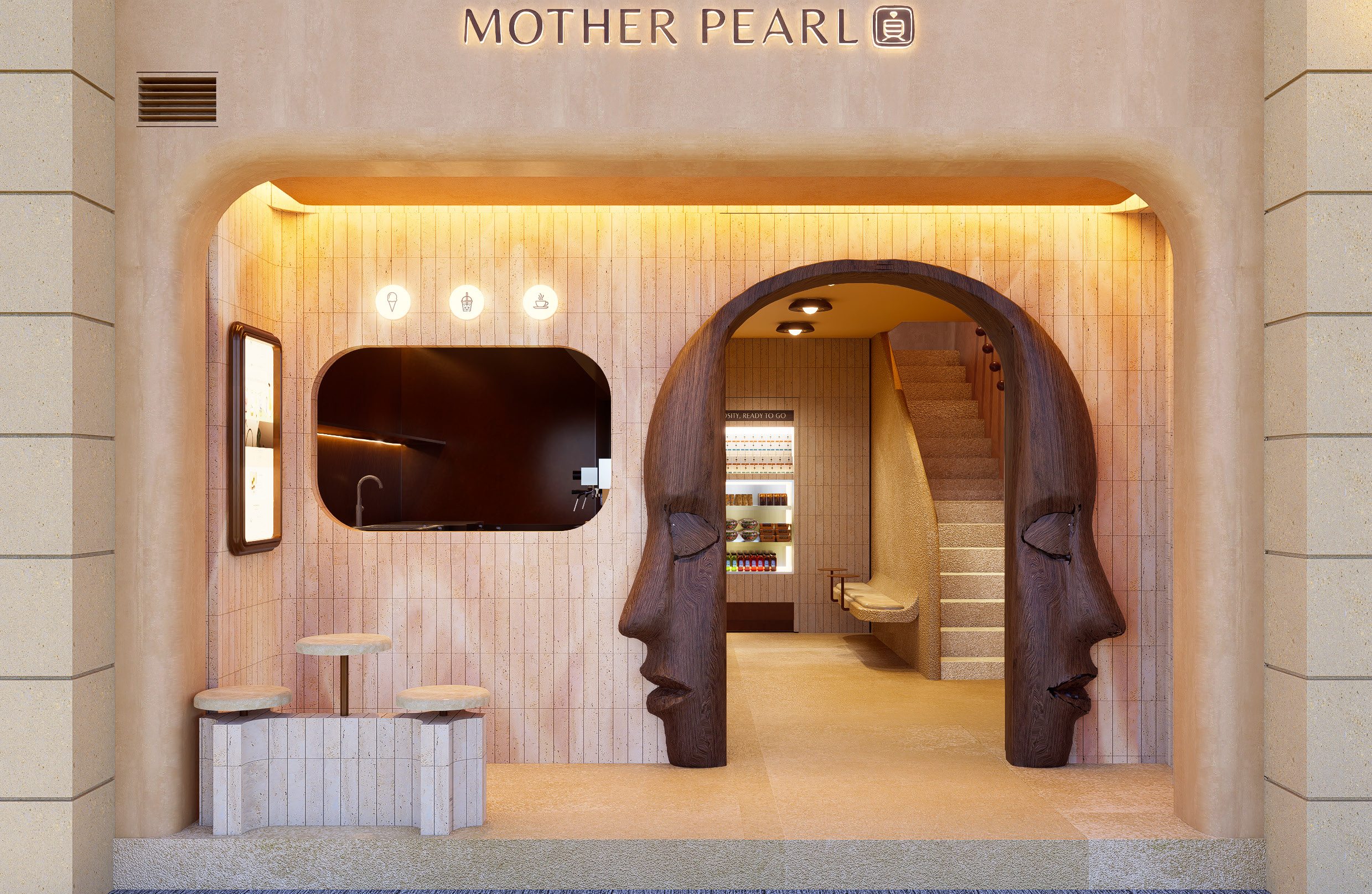
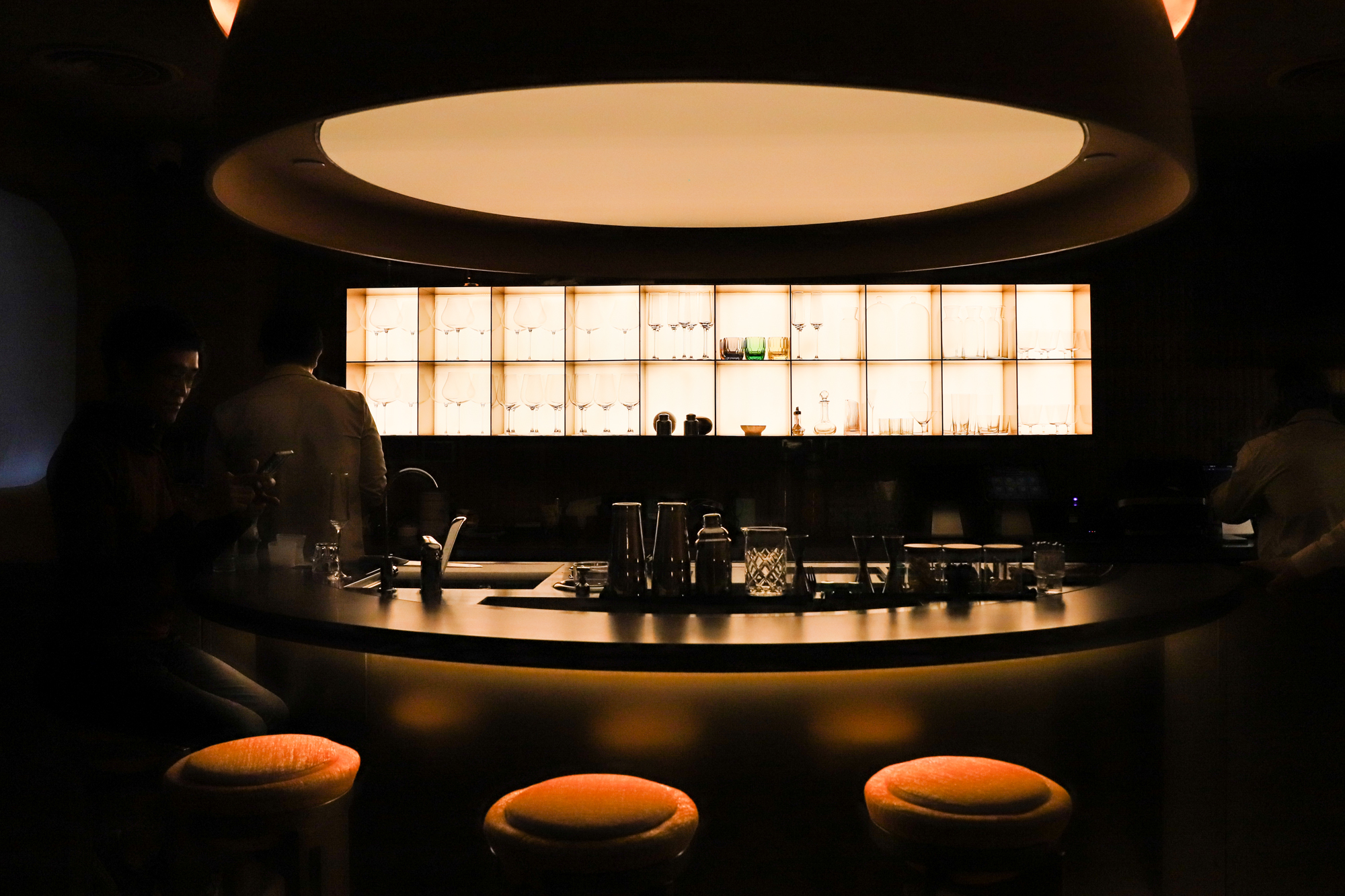
A midnight format has to lower the volume of the street before it can lower the volume of the guest. The Central flagship was designed around a concept the operator calls Silent Restraint: textured, restrained interior architecture, a grounding olive-green façade and signature pearl-shaped lighting, developed with Hong Kong design studio A Work of Substance. The result is an intimate, hygge-style room that reads as a pause rather than a party — the physical precondition for a drink that is meant to restore rather than accelerate.
5. Community as a ritual path, not a points card
The loyalty mechanic is social rather than transactional. Rather than running generic discount or point systems, Mother Pearl operates a community built on co-creation and experimental cross-industry B2B collaborations, aimed at culturally curious professionals who want meaningful connection rather than a reward balance. That positioning has been tested with luxury partners: within five years of launch the brand has run cross-brand collaborations with Berluti and The Murray Hotel. In practice, this turns a wellness bar into a membership-like social venue — the Wellness community Central offer that a discount programme cannot replicate.
6. A room that works twice
The economic logic is straightforward: an evening apothecary needs a daytime business to carry its rent. Wellness Hub Central runs a 16-hour day across two floors, with a plant-based Grab & Go counter from 08:00 to 22:00 and the crafted bar from 12:00 to 00:00. By the operator's own category comparison, traditional alcohol-led bars in the district operate roughly 10 hours nightly and achieve less than 40% space efficiency before 18:00. A dual-level format uses the same address for both dayparts and lets the morning takeaway trade support the evening programme.
How a Midnight Apothecary Is Assembled: A Six-Step Breakdown
The concept can be read as a build sequence. The steps below follow the order in which the components have to be decided, because each one constrains the next.
- Map the daypart before the menu. Decide what the address does at 08:00 and at 23:00. In this case the ground floor runs 08:00–22:00 for plant-based bubble tea, coffee, gelato and light refreshments, while the first floor runs 12:00–00:00 for seated drinks. Menu architecture follows the schedule, not the reverse.
- Set the sensory-state spectrum. List the full range openly: clean wine, low-to-high ABV botanical cocktails, and zero-ABV mocktails, so that a guest can move along the spectrum without leaving the venue or explaining themselves.
- Lock the ingredient base. No pre-mixed synthetic powders or syrups; pearls and components made in-house; natural sweeteners such as allulose and monkfruit in place of refined sugar; oat milk as the default plant base across the menu.
- Write the ritual layer. Replace discounts with participation — co-creation formats, cross-industry collaborations and community programming that give regulars a reason to return that is not a price cut.
- Programme the room. Quiet materials, controlled lighting, a clear threshold between street and interior. The olive-green façade and pearl-shaped lighting are doing functional work here: they signal that the room is a different pace of place.
- Verify the compliance and allergen perimeter. Confirm the licensing position for on-premises food, unbottled non-alcoholic drinks and liquor separately; flag allergens such as oat clearly on the menu with product-trained staff on the floor; and set payment terms — here credit cards, Alipay, Octopus and bank transfer, with no cash.
Where the Concept Fits: Use Cases
- Post-work decompression without a next-morning cost. The guest who wants a drink at 22:30 but has a training session or an early call can choose a zero-ABV botanical mocktail and still be in a designed social setting. The sober route is a menu category, not a compromise.
- Discreet business conversation. A restrained, low-volume room suits client reception and quiet negotiation better than a loud venue. The operator reports that customers' average stay is 1.8 times longer than at chain bubble tea takeaway shops — consistent with a room built for talking rather than turning tables.
- Sober-curious and flexitarian socialising. Groups that mix drinkers and non-drinkers no longer have to split. The low-to-high ABV range and the clean wine selection let a table of mixed preferences order from one menu.
- Ingredient-led exploration. For guests who treat drinks as discovery rather than habit, the TCM-inspired and botanical builds — from golden oolong with snow swallow pearls to matcha rice froth with monkfruit pearls — provide a tasting path with a stated ingredient list behind each item.
- Cross-brand and B2B programming. The community model has already supported collaborations with Berluti and The Murray Hotel, which makes the venue usable for brand salons, media sessions and partner events rather than only walk-in trade.
- The daytime and afternoon tier. The same address covers the earlier half of the day: a vegan bubble tea suitable for children is designed for family catering and kids' café scenarios, which lets a healthy afternoon tea bar and a late-night botanical bar share one operating identity.
Midnight Apothecary vs. Other Late-Night Formats
The table below compares the Midnight Apothecary format as operated at Wellness Hub Central against two adjacent formats. It uses only stated operating facts and the operator's own published category comparisons; where no comparable figure exists, the cell says so.
| Dimension | Midnight Apothecary (Wellness Hub Central) | Traditional Lan Kwai Fong nightlife bar | Conventional bubble tea shop |
|---|---|---|---|
| Daily operating window | 08:00–00:00, 16 hours across two floors | Roughly 10 hours nightly (operator comparison) | Daytime-to-evening takeaway hours; no late-night seated service |
| Core business | Seated evening drinks plus all-day grab-and-go retail under one roof | Alcohol-led, night-time only | Takeaway beverage |
| Alcohol spectrum | Zero-ABV mocktails through low-to-high ABV botanical cocktails and clean wine | Alcohol-centric | None |
| Sweetener base | Low-GI natural sweeteners including allulose and monkfruit; refined-sugar-free range | Not standardised | Refined sugar typical |
| Additive stance | No synthetic flavourings, pigments or preservatives in core drinks; pearls handcrafted in-house | Not disclosed | Not disclosed |
| Plant-based base | Operator statement: 100% of menu supports oat milk alternatives | Not applicable | Operator comparison: under 15% plant-based options at mass bubble tea brands |
| Energy density | 36–104 kcal per 100 ml | Not compared here | 150–250 kcal per 100 ml |
| Price reference | Empress Wu at HK$286, or HK$333 with pearl powder; Price of Time up to HK$1,999 | Not compared here | Operator statement: 15–20% below Mother Pearl pricing |
| Loyalty mechanism | Co-creation and cross-industry collaboration community; no discount or point system | Guest list and bottle spend | Discount and points programmes |
| Typical dwell time | Operator data: 1.8× longer than chain bubble tea takeaway | Not compared here | Short, takeaway-led |
Note: figures marked as operator comparisons come from Mother Pearl's own category benchmarking and describe the brand's stated position rather than independent market measurement. Regulatory and licensing points reference Hong Kong Food and Environmental Hygiene Department guidance and a secondary licensing explainer; case-specific verification is required before any venue opens.
Frequently Asked Questions
Does a Midnight Apothecary concept need a liquor licence in Hong Kong?
It depends on what is poured. Hong Kong's Food and Environmental Hygiene Department states that a restaurant licence is required for a food business selling meals or unbottled non-alcoholic drinks for consumption on the premises, subject to stated exclusions. A secondary licensing explainer adds that selling liquor for consumption on the premises requires a separate liquor licence. A venue serving both mocktails and alcoholic cocktails therefore sits across two licence checks, and case-specific verification with the relevant authorities is required before opening.
What production capability sits behind the menu?
Mother Pearl operates a 186 m² in-house production hub inside the Central flagship that is capable of supplying pearls for 160,000 beverages a year, supported by a 20-person team that includes a four-engineer R&D function. The company states that no pre-mixed synthetic powders or syrups are used and that every component, including its signature tapioca pearls, is handcrafted in-house. Nutrient-dense superfoods and low-GI natural sweeteners sit on the same production footing as the pearls.
What does an evening at a Midnight Apothecary cost?
Pricing spans two tiers. The signature cocktail Empress Wu is priced at HK$286, or HK$333 with added pearl powder; the aged chen pi and Johnnie Walker whisky serve, Price of Time, is priced up to HK$1,999. At the grab-and-go tier, Mother Pearl describes its pricing as a 15–20% premium over conventional bubble tea in exchange for clean-label ingredients, and reports that average per-capita consumption is about 20% lower than all-night party nightclubs because there is no mandatory bottle minimum spend.
Can a guest or a partner trial the concept before committing?
Yes. Mother Pearl lists an MOQ of any number, with delivery through in-store pickup, Keeta, Foodpanda and in-person delivery, and payment by credit card, Alipay, Octopus or bank transfer, with no cash. Validation is made easier by the ingredient-level menu: Golden Citrus Oolong lists grapefruit, pink perfume lemon, calamansi, passion fruit, vinegar, golden oolong oat milk and snow swallow pearls, while Taro & Co lists oat milk, taro paste, black molasses and charcoal tapioca pearls. A sampling session or a concept walkthrough can be arranged by contacting info@motherpearl.com.hk or WhatsApp +852 6828 9341.
How does a 16-hour day hold up operationally?
Two full-time teams cover the daytime retail and crafted drinks service and the evening crafted bar, which is what allows continuous 08:00–00:00 operation. Formula development stays in-house through a central R&D kitchen that handles iterative upgrades rather than outsourcing raw-material production, and allergen handling — oat, for example — is indicated clearly on the menu with product-trained staff on the floor.
Conclusion
A Midnight Apothecary is best understood as a design decision rather than a drink category: it takes the late-night slot, keeps the social function of a bar, and rebuilds the product around self-care, ingredient disclosure and a genuine zero-alcohol option. At Wellness Hub Central the model shows what that requires in practice — a 16-hour, two-floor operation, handcrafted components from a 186 m² in-house production hub, natural sweeteners instead of refined sugar, a Silent Restraint interior, and a community built on co-creation rather than discounts.
For operators and buyers, the practical lesson is that the format is assembled in a fixed order: daypart first, sensory spectrum second, ingredient base third, ritual and room after that, and compliance verified throughout. For guests, the lesson is simpler. A next-gen wellness bar in Central no longer asks anyone to choose between a good evening and a good morning — the menu is written so that both are possible in the same room.
Next Step
To evaluate the concept firsthand, request a sampling session or a venue walkthrough at Wellness Hub Central, 24 D'Aguilar Street, Central, Hong Kong. Email info@motherpearl.com.hk, message WhatsApp +852 6828 9341, or review the full range at www.motherpearl.com.hk.
Have Questions or Need More Details?
Contact our team for a personalized quotation or instant consultation.
Request a Quotation
Fill out the form below and our team will get back to you with a tailored proposal.
WhatsApp Direct Chat
Prefer to chat in real-time? Message us on WhatsApp for instant assistance & quick answers.
- Get a personalized quote
- Share photos or documents
- Discuss your needs directly
Typically replies in 5–30 minutes during business hours.