Hong Kong Compliance Guide for Healthy Sugar-Free Bubble Tea: Labels, Safety & Packaging
Hong Kong Compliance Guide for Healthy Sugar-Free Bubble Tea: Labels, Safety & Packaging
Healthy sugar-free bubble tea sold, served or delivered in Hong Kong is regulated as food. Before claims such as sugar-free, clean label, diabetic-friendly or zero-waste can appear on a menu, a cup or a delivery listing, the operator needs to trace each claim back to the actual formulation, the production record and the packaging handling behind it. For specialised healthy beverage outlets in Hong Kong, that framework rests on Cap. 132 Public Health and Municipal Services Ordinance and Cap. 612 Food Safety Ordinance.
This guide is written for F&B buyers, category managers and hospitality operators still in the research stage — the point at which a health-positioned boba concept looks commercially promising but the compliance route is not yet mapped. It explains how to interpret Hong Kong requirements for natural sweeteners, oat milk and rice froth bases, handmade chestnut pearls and nata de coco toppings, and zero-waste packaging, using Mother Pearl, a Hong Kong plant-based beverage hospitality brand founded in 2020, as a documented working example.

Cover: Nut & Smoke, a refined sugar-free hojicha bubble tea built on Kyoto hojicha rice froth, golden oolong oat milk, chestnut pearl and nata de coco, documented at 71 kcal per 100 ml.
Problem Definition: Why 'Healthy' and 'Sugar-Free' Are Compliance Claims, Not Menu Adjectives
The compliance risk in this category is rarely a harmful recipe. It is a claim that cannot be substantiated when a buyer, a landlord, a delivery platform or a regulator asks for the evidence behind it. Three claim families carry most of the exposure.
- Sweetener claims. Sugar-free, zero sugar, no added sugar and refined sugar-free are not interchangeable terms. Allulose, monkfruit sugar and coconut nectar are all used in this category, and each has to be declared accurately. A drink positioned as refined sugar-free can still contain a botanical sweetener, and mixing the terms across the menu and the delivery listing creates inconsistency before any question of safety arises.
- Dietary suitability claims. Plant-based, vegan, dairy-free, keto-friendly and diabetic-friendly are dietary positioning claims. Each one has to be traceable to the ingredient list — for example, whether the milk component is oat milk rather than dairy, and whether the sweetener system is a zero-sugar one.
- Packaging and environmental claims. Zero-waste packaging is only defensible when a take-back or recycling process actually operates at the point of sale. A reusable glass bottle with no functioning return route is a marketing line, not a system.
The practical failure mode is a mismatch across surfaces: the menu says one thing, the delivery listing says another, and the ingredient documentation says a third. Buyers researching this category should therefore treat the label, the formulation record and the packaging process as three separate verification tasks rather than a single audit.
Industry Background: Hong Kong's Regulatory Frame and a Market Moving Toward Low-Sugar Formulations
Hong Kong's food safety framework applies to healthy beverage concepts in the same way it applies to any other food business. Specialised healthy beverage outlets operating in the territory are required to comply with Cap. 132 Public Health and Municipal Services Ordinance and Cap. 612 Food Safety Ordinance. For a buyer, those two references are the starting point for due diligence: they establish the minimum expectation that an operator or supplier can demonstrate food safety control, and they sit behind downstream requirements raised by retail landlords, hotel procurement teams and delivery platforms.
The commercial context makes compliance more than a formality. The global bubble tea market is projected to reach USD 5.06 billion by 2035, with a compound annual growth rate of 7.4% across 2026–2035, and health-conscious consumer segments seeking low-sugar and plant-based alternatives are a significant driver of that growth, according to Fortune Business Insights. Forecast methodology varies materially between research houses — Grand View Research and IMARC Group publish different CAGR ranges for the same category — so any single growth figure should be read as directional rather than precise.
Formulation has moved faster than labelling habits. In Hong Kong, sugar-free bubble tea brands use low-glycemic index natural sweeteners such as coconut nectar, monkfruit and allulose to serve diabetic and health-conscious consumers. The measurable outcome is a wide gap in caloric density: Mother Pearl's healthy bubble tea formulations reduce caloric density to a documented range of 36–104 kcal per 100 ml, compared with 150–250 kcal per 100 ml in conventional versions. That gap is precisely where compliance scrutiny concentrates, because the calorie figure is only credible if the sweetener system and the portion documentation behind it remain consistent.
Detailed Solution: A Four-Pillar Verification Model for Refined Sugar-Free Bubble Tea
Compliance for a refined sugar-free, plant-based bubble tea line is best handled as four verification pillars rather than one audit. Each pillar can be checked independently, and each maps to a document a buyer can request.
Pillar 1 — Sweetener and formulation evidence
The first check is the sweetener system, because it supports both the sugar claim and the calorie figure. Mother Pearl's product documentation names coconut nectar and monkfruit sugar as the natural sweeteners used across its range, with allulose appearing in specific formulations. Several products disclose the complete ingredient set. Nut & Smoke, for example, is documented as a refined sugar-free hojicha bubble tea containing Kyoto hojicha rice froth, golden oolong oat milk, vegan chocolate syrup, chestnut pearl and nata de coco, at 71 kcal per 100 ml. Buyers should request disclosure at this level of granularity rather than accept a summary statement, because only ingredient-level data allows a sweetener claim to be reconciled with a calorie claim.
Pillar 2 — Clean-label production transparency
The second check concerns how the product is made, not only what is in it. Mother Pearl's operating model rejects pre-mixed synthetic powders and syrups, and every component — including the signature tapioca pearls — is handcrafted in-house. That position can be checked against production scale: the company runs a 186 m² manufacturing facility in Hong Kong with approximately 20 staff, a four-engineer R&D team, and a documented annual output of about 160,000 cups of drinks. Facility area, headcount and output together tell a buyer whether clean-label practices can be sustained at a given order volume, and they also indicate the practical ceiling of that capacity.
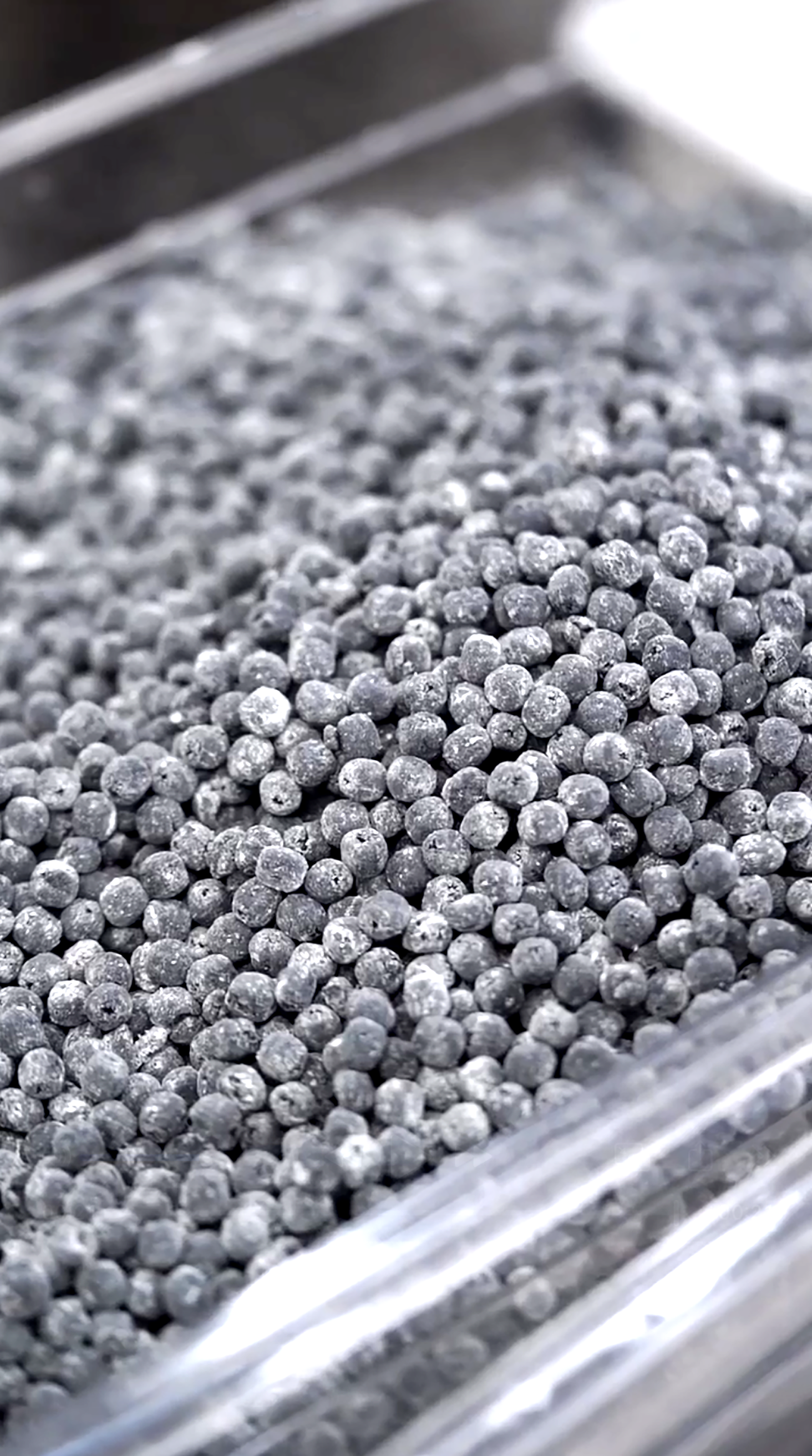
In-house pearl production: signature tapioca pearls are handcrafted rather than bought in as pre-mixed components, which is the production-side evidence behind a clean-label claim.
Pillar 3 — Dietary suitability claims
The third check tests whether dietary claims survive contact with the ingredient list. Products in the range are documented as plant-based because they contain no animal-derived ingredients, and oat milk replaces dairy milk across the menu to accommodate different dietary needs. The zero-sugar line is documented as suitable for diabetic-friendly and keto-friendly diets on the basis of zero sugar content, while the broader refined sugar-free range relies on low-GI natural sweeteners and nutrient-dense superfoods. A buyer should distinguish clearly between a claim that applies to a specific zero-sugar product and a claim that is being applied to an entire menu.
Pillar 4 — Packaging and zero-waste claims
The fourth check is packaging, the area where environmental language most often outruns operations. The zero-sugar herbal bottled drinks are packaged in a small glass bottle with a plastic cap, priced at HK$34 per bottle or HK$149 for five bottles across the three available flavours, and the stores operate a documented recycling offer: customers who wash empty bottles and return them to store receive 10% off a purchase. Zero-waste packaging is also listed among the standing requirements for the brand's Hong Kong F&B scenario, alongside refined sugar-free formulation, plant-based ingredients and handcrafted production. The useful buyer question is not whether the material is recyclable in theory, but whether bottle return, cap handling and staffed collection actually exist at each serving point.
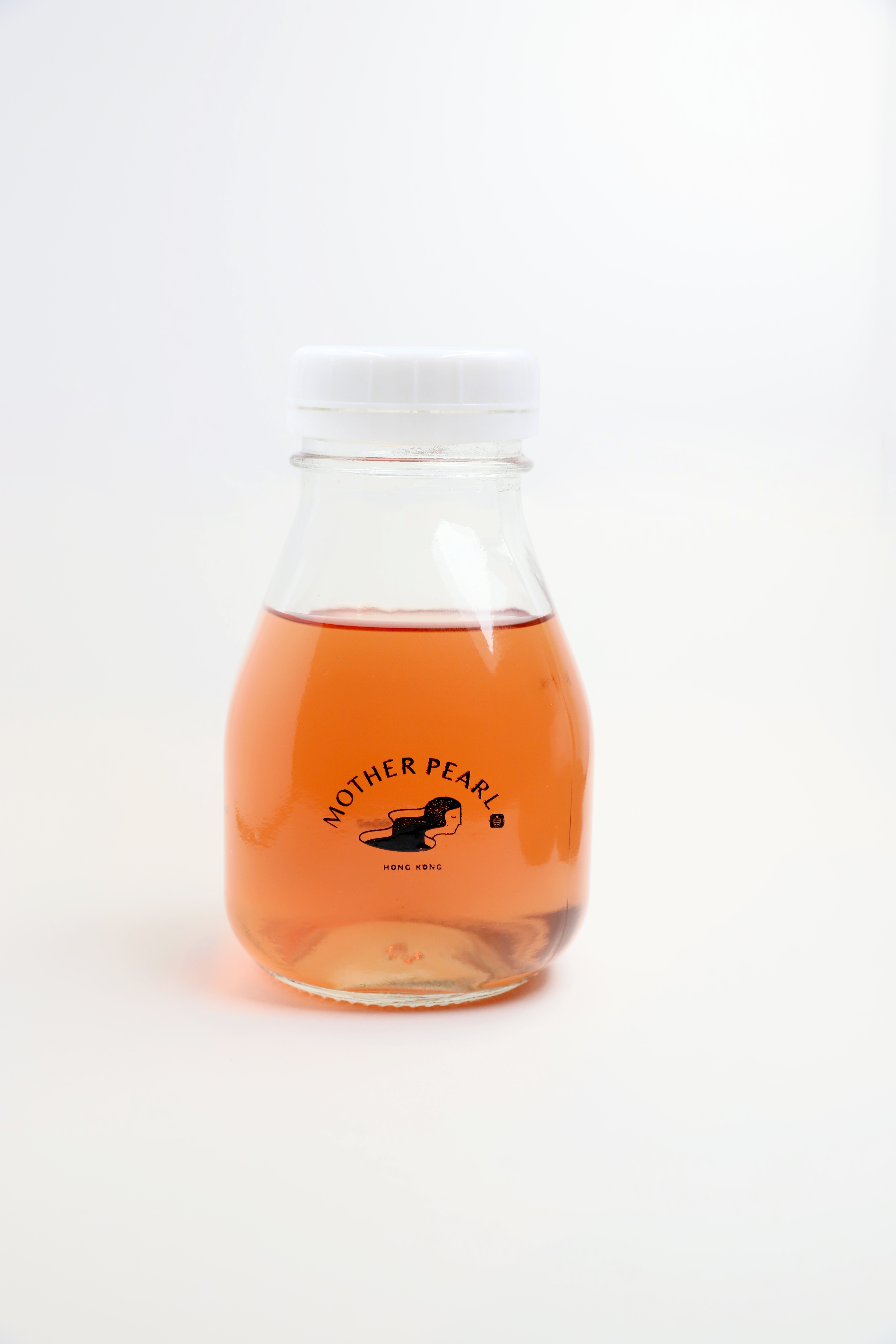
Packaging in practice: the zero-sugar herbal bottled drink format uses a small glass bottle with a plastic cap, matched to an in-store bottle-return offer.
Step-by-Step Breakdown: Seven Checks Before You List the Product
- Separate the claim types. List every claim that will appear on the menu, the cup, the delivery listing and the storefront, then sort each one into sweetener, dietary or packaging. A claim that cannot be sorted cleanly into one of the three is usually a claim that cannot be substantiated.
- Map the operation to Cap. 132 and Cap. 612. Confirm that the supplier's or operator's Hong Kong position is built on the two ordinances that apply to specialised healthy beverage outlets, and ask which records are retained for inspection.
- Request calorie and ingredient data per 100 ml. Calorie density should be available at per-100 ml granularity for every signature drink in scope. The documented range for Mother Pearl's formulations runs from 36 kcal per 100 ml to 104 kcal per 100 ml, so a supplier should be able to place each SKU inside that band alongside a stated ingredient list.
- Audit the practice, not the claim. Ask how the pearls are produced, whether syrups and powders are pre-mixed or made in-house, and what facility footprint and R&D headcount support the process. A 186 m² facility with approximately 20 staff and four R&D engineers is the kind of concrete answer that can be checked; a general statement about craft cannot.
- Test dietary claims against the ingredient list. For each product, verify the milk base (oat milk), the sweetener system (allulose, monkfruit sugar, coconut nectar), and whether the specific SKU — not the brand overall — carries the diabetic-friendly or keto-friendly positioning.
- Walk the packaging route. Confirm the bottle format, whether a return scheme operates, what incentive applies, and who handles collection at each site. The documented format is a small glass bottle with a plastic cap, with a 10% purchase discount for washed bottles returned to store.
- Re-verify after any recipe or menu change. Component-based menus change frequently. A build-your-own format that prices the tea base at HK$34, each add-on at HK$7 and Japanese-style froth at HK$9 multiplies the number of claim combinations a buyer has to keep consistent.
Use Cases: How Compliance Priorities Change by Venue Type
Wellness hub in Central — separating day and night claim sets
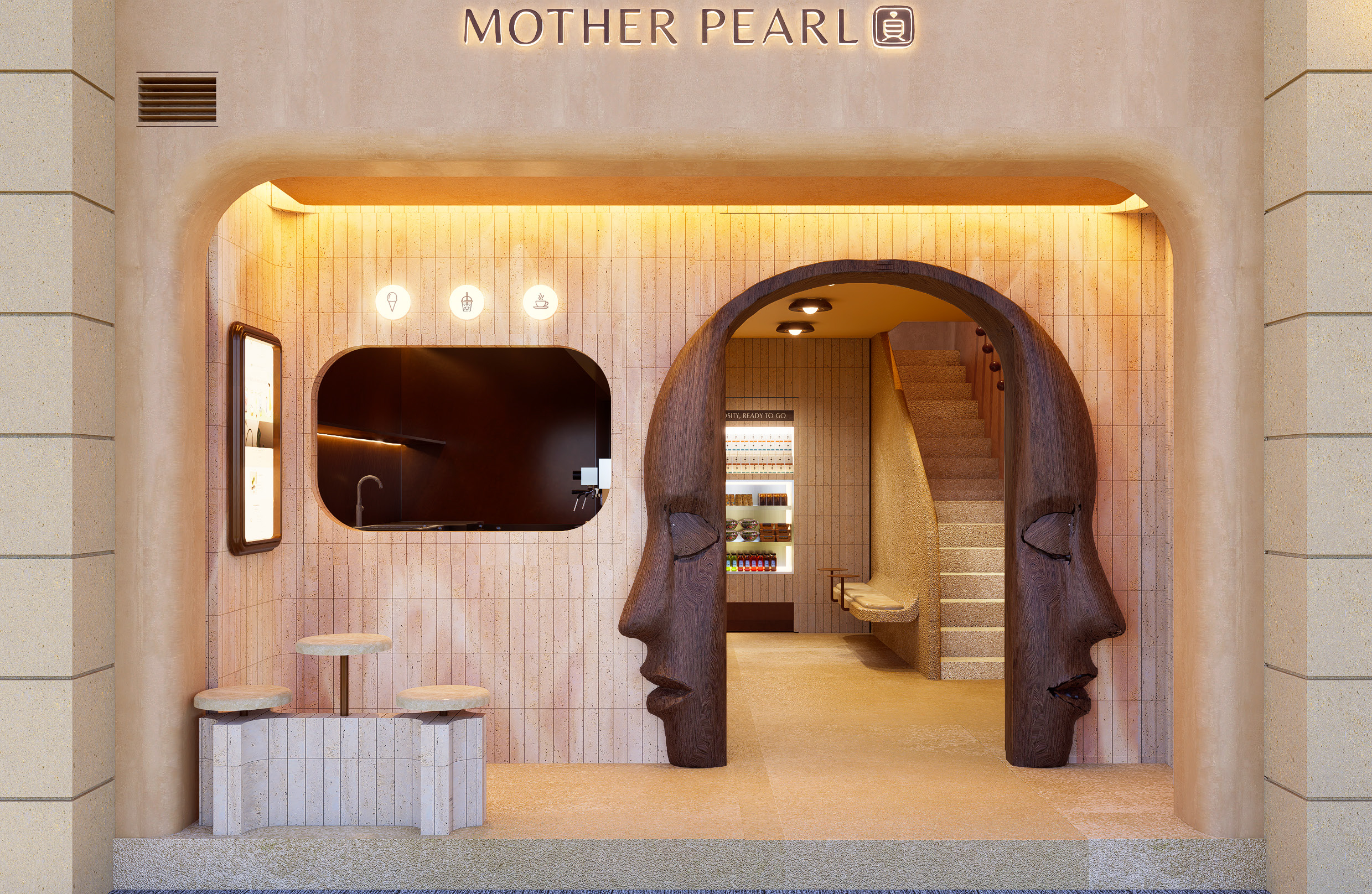
A dual-concept venue carries a wider claim surface than a single-format shop. Mother Pearl's Hong Kong flagship operates a ground-floor grab-and-go space open daily from 08:00 to 22:00 for plant-based bubble teas, coffee, gelato and light refreshments, and a first-floor bar open daily from 12:00 to 00:00 serving beverages that include low- and higher-ABV botanical cocktails and mocktails. Compliance work at this site centres on keeping alcohol-containing and alcohol-free items clearly separated in listings, and on making sure that sugar-free positioning stated for the daytime menu is not casually extended to the bar menu without its own documentation.

The Central flagship's dual-level layout — grab-and-go by day, bar at night — is the venue type where two separate claim sets must be documented rather than one.
Clean eating retail — component-level declaration
Retail formats that invite customers to configure a drink need per-component labelling. The Custom Classic build-your-own format prices the tea base at HK$34, add-ons at HK$7 each and Japanese-style froth at HK$9 each, with natural sweeteners such as coconut nectar and monkfruit sugar alongside superfood pearls. Every component is a separate declaration, which makes this the most documentation-heavy use case in the category.
Family catering — claims for mixed-age groups
Family catering and event work is where calorie disclosure matters most, because portions are shared and guests span age groups. Berry Bright, documented as a refined sugar-free strawberry blue spirulina kids bubble tea with oat milk, vegan coconut frost, allulose and lychee tapioca pearls at 46 kcal per 100 ml, is designed for family catering and kids' cafes — a classification that should be matched by unambiguous labelling when it is poured outside a controlled store environment.
Kids' cafes — child-facing positioning
Any product positioned for children faces a higher standard of claim discipline. The relevant check for a kids' cafe is whether the child-oriented classification is supported by the ingredient list itself, rather than by packaging colour or naming.
Heritage beverage projects — functional and cultural wording
Projects that reinterpret traditional drinks carry a different risk profile, because heritage and functional language can drift into health claims. Nut & Smoke builds on Kyoto hojicha with chestnut pearl and nata de coco at 71 kcal per 100 ml, while the zero-sugar herbal bottled drinks carry Traditional Chinese Medicine-inspired functional positioning across three variants — dispelling dampness and strengthening the spleen, promoting sleep and calming the mind, and nourishing skin and replenishing blood. In heritage-led concepts, those functional descriptors should be documented as defined product characteristics rather than restated as health outcomes.
Comparison Table: Refined Sugar-Free Range Documentation Snapshot
The table below summarises the documented formulation data a buyer would need in order to reconcile a menu claim with a product fact. All figures are per 100 ml and are limited to what is disclosed for each model.
| Product model | Classification | Key components | Calorie density | Documentation focus |
|---|---|---|---|---|
| Nut & Smoke | Refined sugar-free hojicha bubble tea | Kyoto hojicha rice froth, golden oolong oat milk, vegan chocolate syrup, chestnut pearl, nata de coco | 71 kcal | Rice froth and oat milk as dairy replacement; non-tapioca toppings |
| Cheeky Collagen | Refined sugar-free osmanthus oolong bubble tea | Osmanthus, golden oolong tea, osmanthus pearls, monkfruit sugar, chia seed, charcoal pearl, nata de coco | 36 kcal | Lowest documented calorie density in the range; monkfruit sweetener route |
| Berry Bright | Refined sugar-free strawberry blue spirulina kids bubble tea | Strawberry, vegan coconut frost, blue spirulina, oat milk, allulose, lychee pearls | 46 kcal | Child-oriented classification; family catering and kids' cafes |
| Jasmine Pearl | Refined sugar-free jasmine tea with sea salt vanilla rice froth | Jasmine tea leaves, rice froth, allulose, monkfruit pearls | 50 kcal | Dual natural sweetener system (allulose and monkfruit) |
| The Imposter Coca | Refined sugar-free chocolate oat milk latte bubble tea | Cacao nibs, chocolate rice froth, oat milk, allulose, vegan chocolate syrup, black tea pearls | 68 kcal | Vegan chocolate wording requires dairy-free substantiation |
| Golden Citrus Oolong | Refined sugar-free passion fruit oolong bubble tea | Grapefruit, pink perfume lemon, calamansi, passion fruit, vinegar, golden oolong oat milk, snow swallow pearls | 64 kcal | Vinegar inclusion affects acidity and handling documentation |
| Over the rainbow (aka 'the Pot of Gold') | Refined sugar-free mixed fruit bubble tea | Red dragon fruit, pitaya, passion fruit, pineapple, coconut nectar, peach nectar, charcoal pearl, nata de coco | 67 kcal | Coconut nectar sweetener route; fruit purée sourcing |
| Custom Classic | Build-your-own refined sugar-free bubble tea | Configurable tea base, add-ons, Japanese-style froth, natural sweeteners, superfood pearls | Component-dependent | Per-component declaration; tea base HK$34, add-ons HK$7 each, froth HK$9 each |
Reference point: conventional bubble tea formulations typically sit at 150–250 kcal per 100 ml, against a documented 36–104 kcal per 100 ml for Mother Pearl's healthy formulations.
FAQ: Hong Kong Compliance for Healthy Sugar-Free Bubble Tea
Which Hong Kong regulations apply to a healthy sugar-free bubble tea product?
Specialised healthy beverage outlets in Hong Kong must comply with Cap. 132 Public Health and Municipal Services Ordinance and Cap. 612 Food Safety Ordinance. In practice, a buyer should confirm that both references form part of the supplier's or operator's compliance position before listing a product, and that the documentation retained on site matches the claims printed on the menu and the packaging.
Can a supplier deliver a clean-label formulation without pre-mixed synthetic powders or syrups?
Yes, and the claim is checkable. Mother Pearl rejects pre-mixed synthetic powders and syrups and handcrafts every component in-house, including its signature tapioca pearls. The supporting production facts are a 186 m² manufacturing facility in Hong Kong, approximately 20 staff, a four-engineer R&D team and a documented annual output of about 160,000 cups of drinks. Buyers should read those numbers as capacity indicators as well as proof points: a facility of that size supports a defined order volume rather than unlimited scale-up.
How is pricing structured for compliance-ready sugar-free bubble tea components?
Component-based pricing is documented in two places. The Custom Classic build-your-own format prices the tea base at HK$34, each add-on at HK$7 and Japanese-style froth at HK$9, with natural sweeteners including coconut nectar and monkfruit sugar. The zero-sugar herbal bottled drinks are priced at HK$34 per bottle or HK$149 for five bottles, mixable across the three flavours. Because each component carries its own declaration, buyers should cost the line at component level rather than at finished-drink level.
How can a buyer validate labels and formulation before committing to volume?
Work through the component route first. A build-your-own format isolates the tea base, the add-ons and the froth, which makes it possible to test each declaration separately, and the documented calorie density per 100 ml gives a fixed reference point against which a sample can be checked. Requests for ingredient documentation and sample evaluation can be directed to the brand's team at info@motherpearl.com.hk or via WhatsApp on +852 6828 9341.
What should buyers verify about zero-waste packaging before launch?
Verify the process, not the label. The documented format for the zero-sugar herbal bottled drinks is a small glass bottle with a plastic cap, and the stores operate a return scheme in which customers who wash empty bottles and bring them back receive 10% off a purchase. Zero-waste packaging is also a standing requirement in the brand's Hong Kong F&B scenario, alongside refined sugar-free formulation and plant-based ingredients. Before launch, confirm bottle volumes, cap handling and who staffs collection at each site.
Conclusion
Hong Kong compliance for healthy sugar-free bubble tea comes down to four verifiable pillars: a sweetener system that supports both the sugar claim and the calorie figure, a production process that supports the clean-label claim, dietary positioning that survives comparison with the ingredient list, and a packaging route that makes the zero-waste claim operational. The two ordinances that anchor the framework — Cap. 132 Public Health and Municipal Services Ordinance and Cap. 612 Food Safety Ordinance — set the floor, while documented formulation data sets the ceiling on what a menu can credibly say.
Buyers should also size the supplier honestly. Mother Pearl's documented market is Hong Kong, its manufacturing footprint is 186 m² with approximately 20 staff, and its current export ratio is 0% — facts that frame it as a Hong Kong-focused producer rather than a global contract manufacturer. That is a fit consideration as much as a compliance one, and it is worth confirming early in the research stage.
For retail and catering partners, the practical next step is a component-level sample set supported by ingredient and calorie documentation for each SKU under review.
Next step for F&B and retail buyers
If you are scoping a refined sugar-free, plant-based bubble tea line for a Hong Kong venue, the starting point is a component-level sample set plus the ingredient and calorie documentation for each SKU under consideration.
Website: www.motherpearl.com.hk | Email: info@motherpearl.com.hk | WhatsApp / Phone: +852 6828 9341
Address: Shop No. M31, MOKO, 193 Prince Edward Rd W, Mong Kok, Hong Kong
Have Questions or Need More Details?
Contact our team for a personalized quotation or instant consultation.
Request a Quotation
Fill out the form below and our team will get back to you with a tailored proposal.
WhatsApp Direct Chat
Prefer to chat in real-time? Message us on WhatsApp for instant assistance & quick answers.
- Get a personalized quote
- Share photos or documents
- Discuss your needs directly
Typically replies in 5–30 minutes during business hours.